Virtual Reality Training Enters the Public Safety Debate
THE OPPORTUNITY:
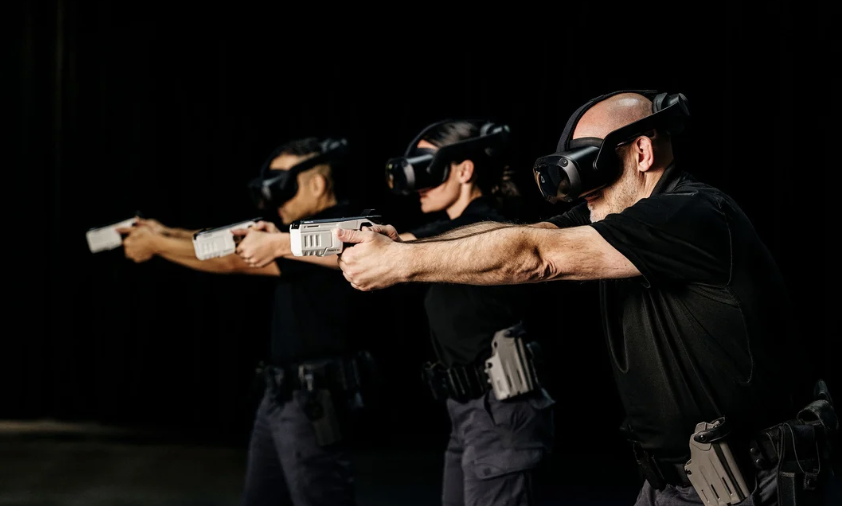
As Axon expanded its presence in Brazil, the company introduced its Virtual Reality (VR) Training solutions to address a clear gap between traditional training and real-life police operations.
In Brazil, law enforcement officers operate in complex and unpredictable environments, from dense urban areas to highways and rural regions. While traditional training remains essential, it does not consistently replicate the pressure, speed, and variability of real-world incidents.
With the launch of Simulator Training: Range Skills and vRBTA (Virtual Reality-Based Training Application), Axon had the opportunity to position VR training as a practical and scalable way to improve decision-making under pressure and support safer outcomes in the field.
The challenge was to turn a highly technical product into a story that mainstream and broadcast media could understand, experience, and explain — while clearly connecting the technology to real-world impact.
THE APPROACH:
Dialogue led the PR and communications strategy, positioning Axon’s VR Training as a practical tool to improve police decision-making, with a clear link to public safety outcomes.
The strategy focused on making the technology tangible through hands-on media experiences, allowing journalists to test the simulator and understand its relevance firsthand.
The work encompassed:
Definition of the communications strategy and key editorial angles
Development of messaging that translated technical capabilities into clear, relevant narratives
Targeted outreach to national broadcast and top-tier media
Organization of immersive press demonstrations with hands-on simulator experiences
Coordination with law enforcement partners, including Brazilian Federal Highway Police, to reinforce credibility and real-world use
Preparation and briefing of Axon spokesperson
On-site support to guide demonstrations and ensure strong visual and editorial output
THE RESULTS:
Dialogue’s work established Axon’s VR Training as a credible and practical approach to improving police training, generating strong national visibility and high-quality broadcast coverage.
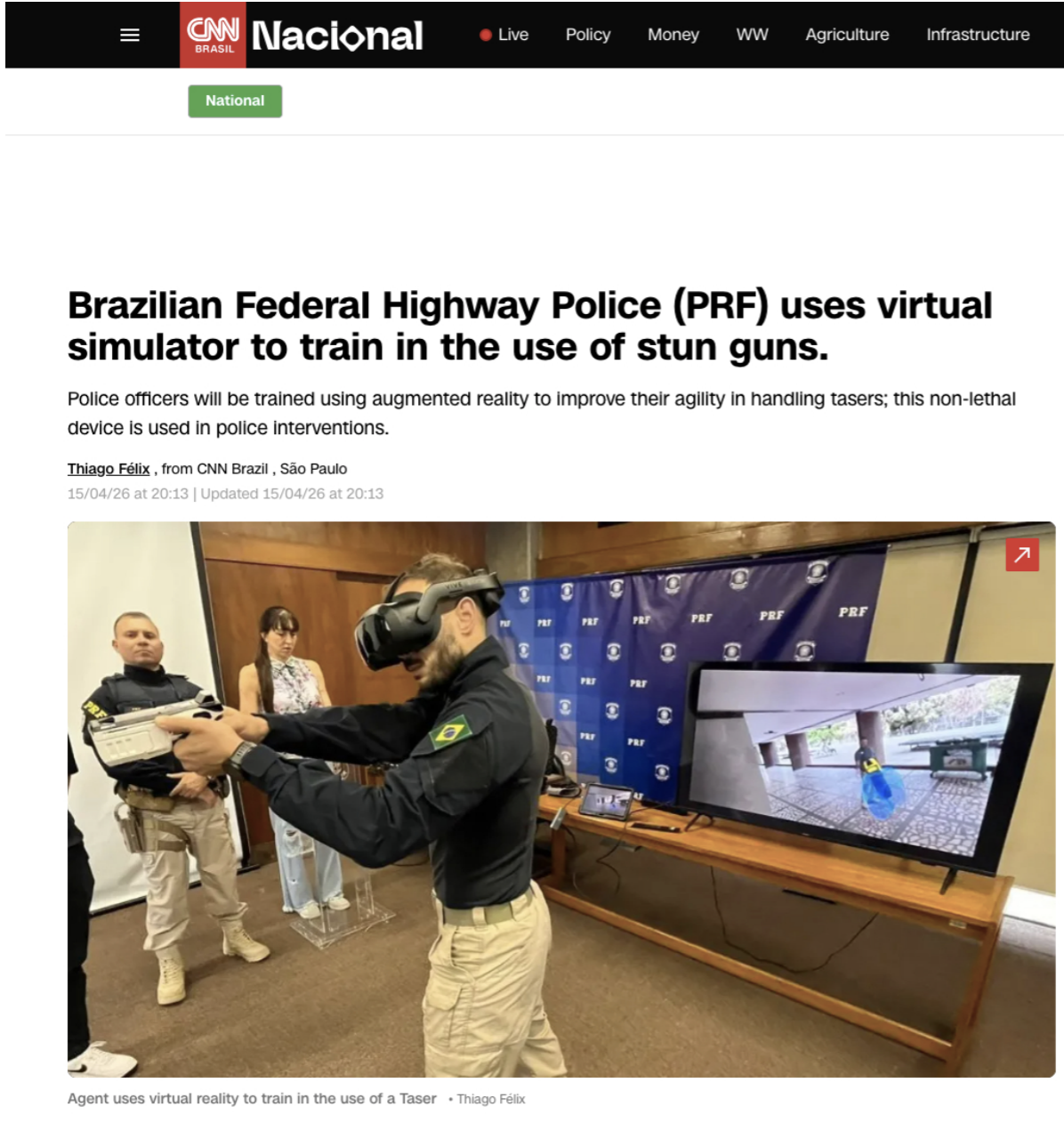
The initiative secured coverage on CNN Brasil, which highlighted VR training as a tool to improve decision-making, reduce escalation, and increase operational efficiency. The piece framed the technology within a broader public-interest angle, emphasizing preparedness, cost efficiency, and safer outcomes.
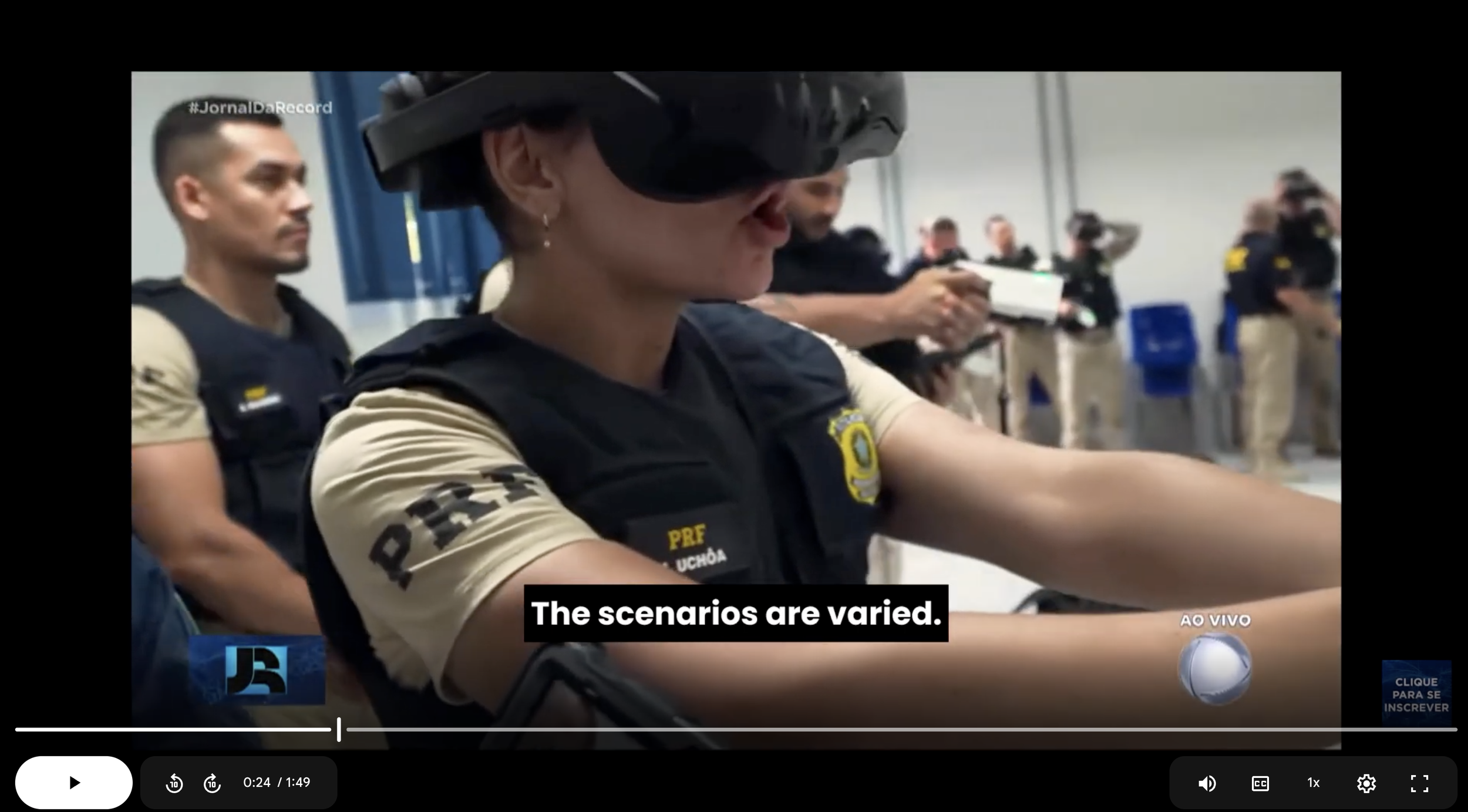
In parallel, a segment aired on Record News, a national 24-hour news television network in Brazil, with nearly two minutes dedicated to the immersive training experience during a prime-time newscast. The report showed how virtual reality is used to simulate real-life scenarios and support police training in high-pressure situations.
Both pieces delivered:
National reach through highly credible broadcast outlets
Strong visual storytelling through hands-on demonstrations
Clear positioning of Axon as a technology partner in police training
Reinforcement of the role of VR in improving decision-making and reducing escalation